What is an industrial router?To understand industrial routers, we must first know what a router is and what routers are used for.
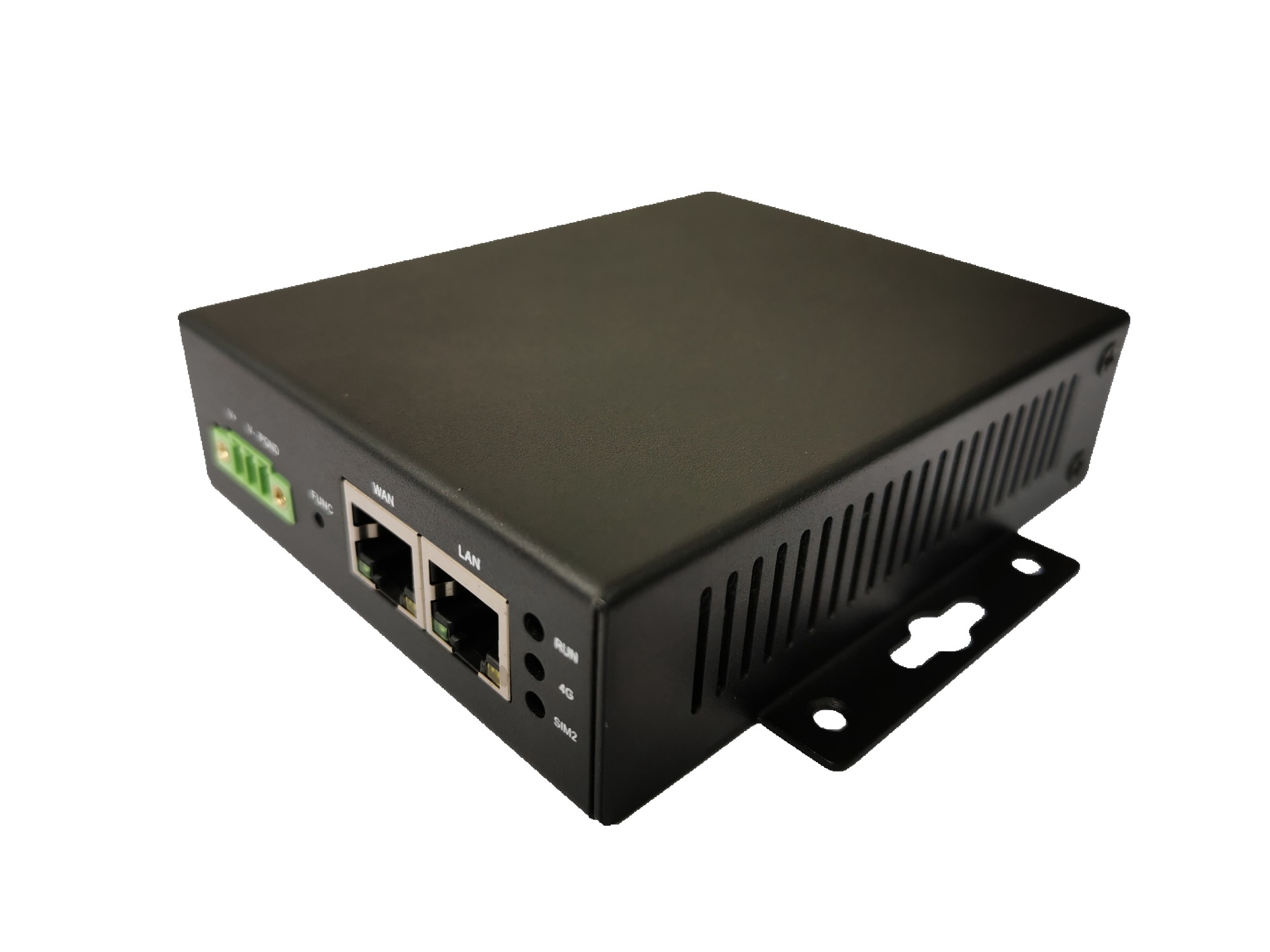
A router is a hardware device that connects two or more networks. It acts as a gateway between networks. It is a dedicated intelligent network device that reads the address in each data packet and then decides how to transmit it. It can understand different protocols, such as the Ethernet protocol used by a local area network and the TCP/IP protocol used by the Internet. In this way, the router can analyze the destination addresses of data packets from various types of networks, and convert the addresses of non-TCP/IP networks into TCP/IP addresses, or vice versa; The best route is sent to the designated location. So routers can connect non-TCP/IP networks to the Internet.
In layman's terms, a router is a network device that connects multiple networks or network segments. It can "translate" the data information between different networks or network segments, so that they can "read" each other's data to form a better Big network.
The router has two typical functions, namely the data channel function and the control function. Data channel functions include forwarding decision, backplane forwarding and output link scheduling, etc., which are generally completed by specific hardware; control functions are generally implemented by software, including information exchange with neighboring routers, system configuration, system management, etc. .
Over the years, the development of routers has been ups and downs. In the mid-1990s, traditional routers became a bottleneck restricting the development of the Internet. Instead, ATM switches have become the core of the IP backbone network, and routers have become supporting actors. In the late 1990s, the scale of the Internet further expanded, traffic doubled every six months, ATM network became a bottleneck, routers made a comeback, after Gbps routing switches came out in 1997, people began to replace ATM switches with Gbps routing switches, and the architecture was based on routers. Core backbone network.
Now we have a preliminary understanding of routers. So what is an industrial router? What is the difference between an ordinary router and an industrial router? How does it affect our lives?
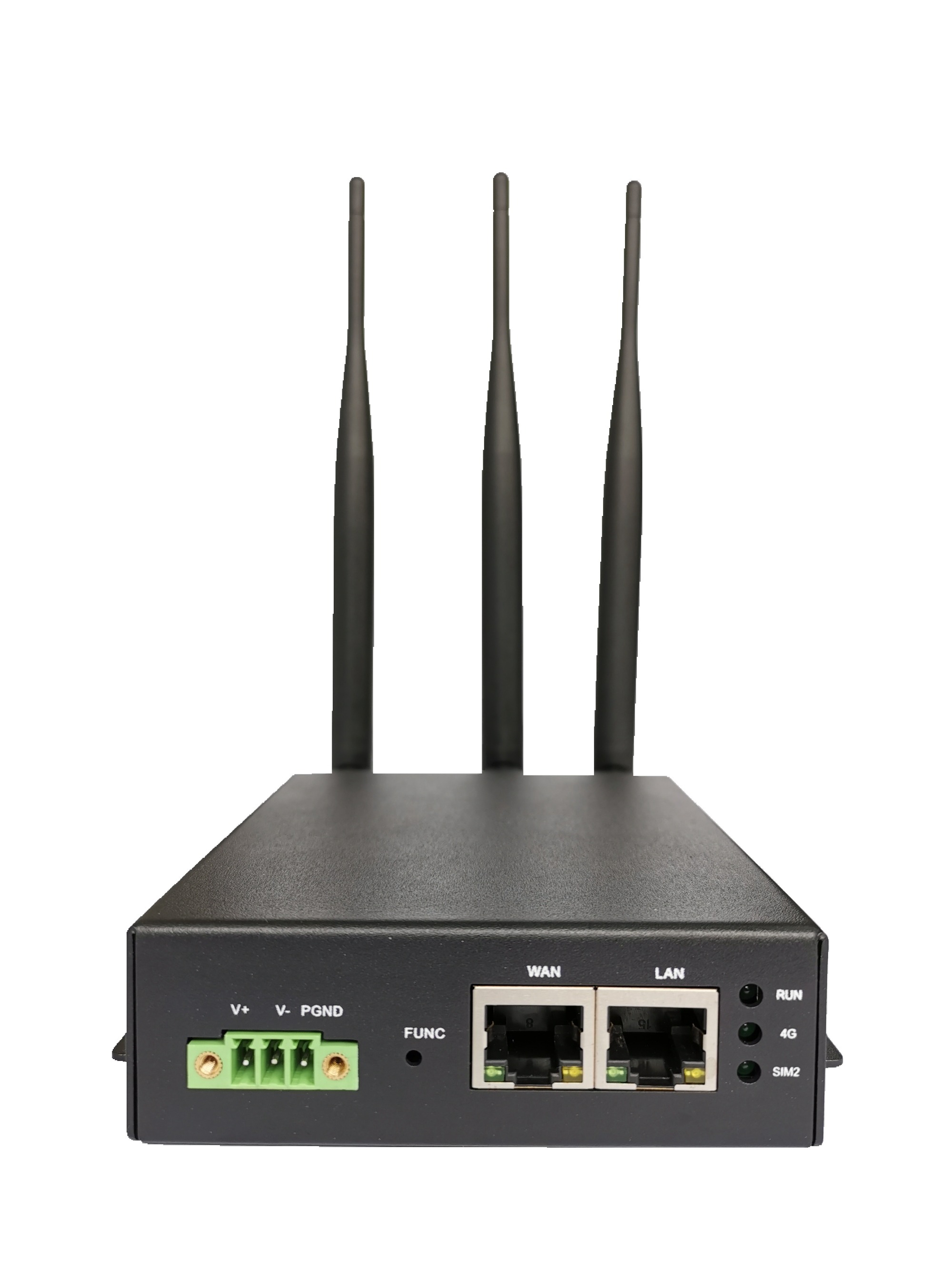
An industrial router is a kind of wireless data transmission function that uses a public wireless network to provide users with wireless data transmission. It has been widely used in the M2M industry in the IoT industry chain, such as smart grid, smart transportation, smart home, financial IoT wireless communication router, mobile POS terminal, supply chain automation, industrial automation, smart building, fire protection, public safety, environment Protection, meteorology, digital medical treatment, remote sensing survey, agriculture, forestry, water affairs, coal mine, petrochemical and other fields.
- Product stability The high stability performance requirements of different industrial routers are difficult to achieve for ordinary home routers. It takes a long time to work without problems, and it can be repaired by itself when the network fails. However, general home routers cannot achieve long-term working conditions, especially in bad weather, the general home routers that have long-term uninterrupted power off are also prone to network outages. Generally, it is prone to malfunction during a period of operation.
- The difference between industrial routers and home routers: the operating temperature requirements of industrial routers at different operating temperatures are actually requirements for electronic components. Industrial routers usually operate in the temperature range of -35 to 75, while ordinary home routers operate in the range of -10 to 60. Normally, room temperature can meet the needs, so they cannot be used in harsh industrial control environments. . Even the general outdoor public area cannot be satisfied in winter.
- Different product functions Industrial-grade wireless routers are used in the industrial control field, and the required functions are more powerful. Not only requires large bandwidth and fast response, but also requires basic functions such as port mapping, VPN, watchdog, stronger firewall, and electrostatic induction protection, while ordinary home routers only need to ensure the network function. As can be seen from the above , If the company chooses home routers because of budget savings, it will lead to many situations, such as Trojan horse viruses, network hackers; the network is often interrupted; it is very easy to fail to find the signal; the router is often too hot and unable to do so Long-term use and so on. Therefore, apart from the difference in price, there is still a big gap between industrial-grade wireless routers and ordinary home routers.
Now everyone is clear about industrial routers, right? Hope to help readers, thank you~