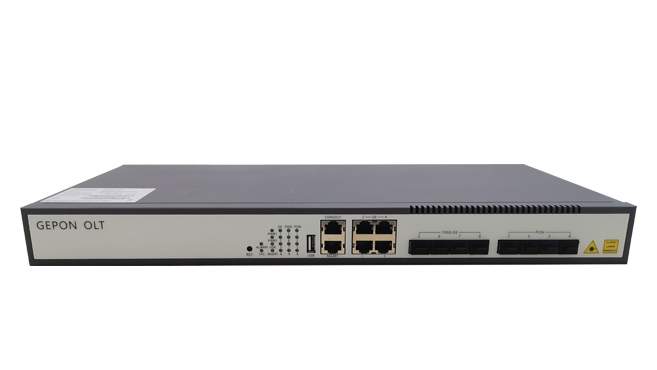
The optical access network is an access network that uses light as the transmission medium, instead of copper wires, for access to every family or enterprise. Optical access network generally consists of three parts: optical line terminal-OLT, optical network unit-ONU, optical distribution network-ODN, among which
OLT and ONU are the core components of the optical access network.
OLT is an optical line terminal, ONU is an optical network unit, they are all optical transmission network connection equipment. It is the two necessary modules in PON: PON (Passive Optical Network). PON means that the optical wiring network does not contain any electronic devices and electronic power supplies. The ODN is all composed of passive devices such as optical splitters and does not require expensive active electronic equipment. A passive optical network includes an optical line terminal (OLT) installed at the central control station, and a batch of first-level matching optical network units (ONUs) installed at the user site. The optical distribution network (ODN) between the OLT and the ONU contains optical fibers and passive optical splitters or couplers.
Routers and switches are data exchange equipment.
ODN (Optical Distribution Network) is an FTTH optical cable network based on PON equipment. Its role is to provide an optical transmission channel between the OLT and the ONU. From the functional point of view, the ODN can be divided into four parts: the feeder optical cable subsystem, the distribution optical cable subsystem, the household line optical cable subsystem and the optical fiber terminal subsystem from the central office to the user end.
ONT is an integral part of ONU.
ONT is the Optical Network Terminal, the most terminal unit of FTTH, commonly known as "optical modem", which is similar to the electric modem of xDSL. ONT is an optical network terminal, which is applied to the end user, while ONU refers to the optical network unit, and there may be other networks between it and the end user.
ONU is Optical Network Unit. The ONU has two functions: it selectively receives the broadcast sent by the OLT, and responds to the OLT if the data needs to be received; collects and buffers the Ethernet data that the user needs to send, and sends it to the OLT according to the assigned sending window Send the cached data.
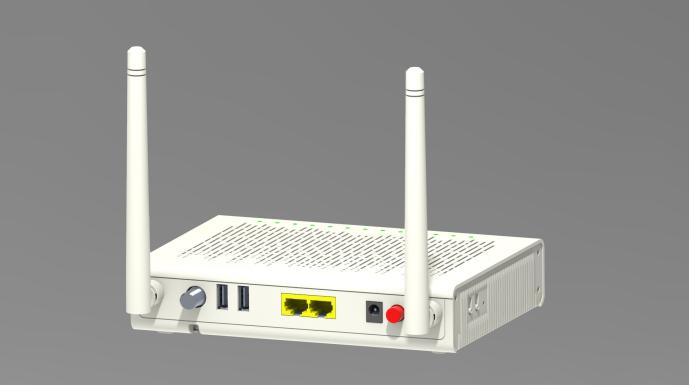
FTTB "fiber to the building" puts 16 ONUs in a unit box in the corridor. There are 16 ONTs in the ONU, and each ONT outputs a network cable electrical signal, which reaches each user terminal through the network cable in the corridor.
FTTH "Fiber to the Home" places a 1:16 optical splitter in the unit box in the corridor, and then reaches each user through the sheathed fiber in the corridor, and each user terminates an ONT. It is equivalent to dismantling the ONU, allowing the terminal device to be infinitely close to the user.
Finally, the ONT can be understood as an ONU with only one port.